CMV: The Common Virus That Hides in...
08 Sep,2026


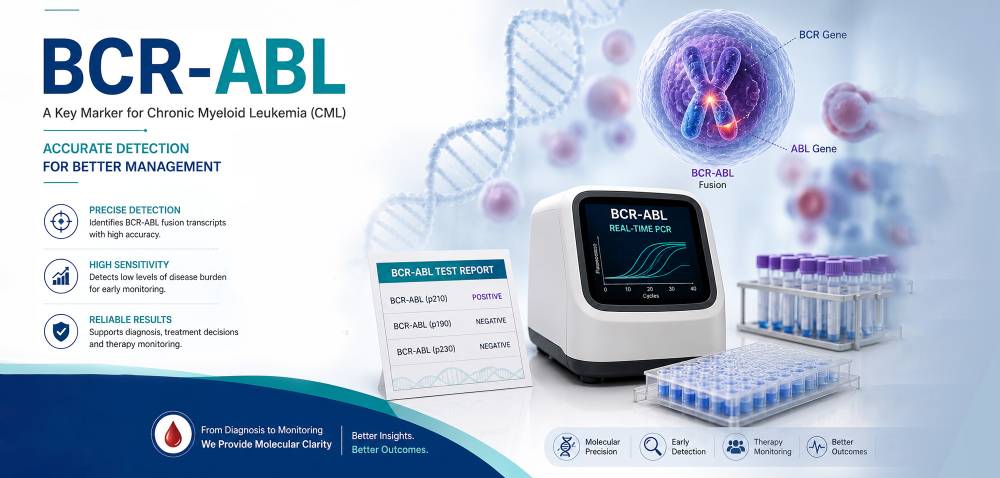
Leukemia is a group of blood cancers that involves the overgrowth of abnormal blood-forming cells. Abnormal cells growing in the bone marrow and blood can affect the normal production of red blood cells, platelets and working white blood cells. This may cause anemia, bleeding or bruising and can increase your chances of getting infection.
The major types of leukemia are acute myeloid leukemia (AML), acute lymphoblastic leukemia (ALL), chronic lymphocytic leukemia (CLL), and chronic myeloid leukemia (CML). The Philadelphia (Ph) chromosome is the molecular lesion that characterizes the majority of CML but is also present in a subset of ALL, particularly in adults.
The Philadelphia chromosome is a reciprocal translocation of chromosome 9 and 22, t(9;22)(q34;q11) that results in the BCR::ABL1 fusion gene. The Philadelphia chromosome is the product of a reciprocal translocation between chromosomes 9 and 22, t(9;22)(q34;q11), generating the BCR::ABL1 fusion gene. This fusion gene encodes for the BCR::ABL1 protein with constitutively active tyrosine kinase activity, resulting in abnormal proliferation and survival of leukemia cells.
CML is a relatively rare type of leukemia, and incidence varies by geography. Approximately 90–95% of CML patients have the Philadelphia chromosome/BCR::ABL1 fusion at diagnosis. BCR::ABL1 is also present in ~20–30% of adults with ALL, although exact frequency varies by population and study group.
CML commonly presents in a chronic phase, which can remain clinically manageable with appropriate treatment. Without effective therapy, however, the disease may progress to accelerated or blast phase, where it becomes substantially more aggressive.
Cytogenetic testing and fluorescence in situ hybridization (FISH) have been valuable for detecting the Philadelphia chromosome and the BCR::ABL1 rearrangement. However, quantitative reverse-transcription PCR (RT-qPCR) offers much higher analytical sensitivity and is the standard molecular method used to monitor BCR::ABL1 transcript levels in CML.
Conventional cytogenetics detects abnormalities if there are enough affected cells, whereas FISH detects BCR::ABL1-positive cells with higher sensitivity. RT-qPCR is highly sensitive for detection of BCR::ABL1 transcripts and thus is very useful for quantification of residual disease during therapy.
Molecular response milestones MMR, MR4, MR4.5 and MR5 represent progressively deeper reductions in BCR::ABL1 transcript levels. Standardized molecular monitoring allows clinicians to evaluate treatment response, detect loss of response and guide decisions on treatment optimization and, in selected patients, treatment-free remission. Decisions should always be based on established clinical guidelines and the complete clinical picture of the patient.
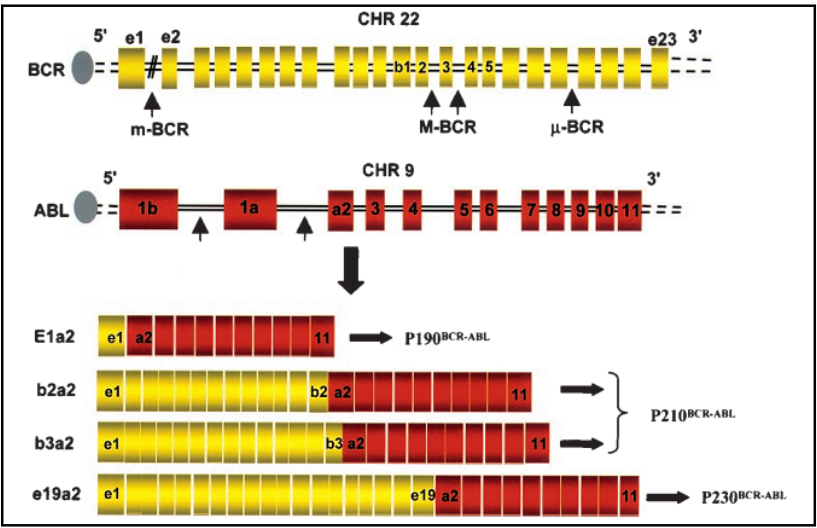
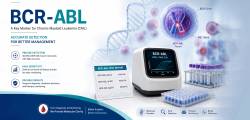
TRUPCR® BCR-ABL1 Quantitative Kit is an RT-qPCR assay designed for the quantitative detection of BCR-ABL1 fusion transcripts (Major (p210), Minor (p190) and Micro (p230) transcripts) in peripheral blood or bone marrow specimens. It is intended to be used in conjunction with clinical and other laboratory information to aid in the molecular assessment and monitoring of BCR-ABL1-positive leukemia.
This allows for the evaluation of BCR-ABL1 transcript levels at various points of disease and treatment response, within the validated measuring range and performance characteristics of the assay. The kit allows the quantitative measurement of BCR-ABL1 transcript levels and monitoring of the molecular response up to a 4.7-log reduction (deep molecular response).
The TRUPCR® BCR-ABL1 Quantitative Kit has the ability to detect, differentiate and quantify Major, Minor and Micro BCR-ABL1 transcripts, the kit supports comprehensive molecular characterization and monitoring of BCR-ABL1–positive disease.
The Philadelphia chromosome changed the way we think about leukemia by tying a particular chromosomal rearrangement to a molecular mechanism of disease. BCR::ABL1 testing now enables clinicians to not only detect leukemia but also to measure molecular response over time.
The TRUPCR® BCR-ABL1 Quantitative Kit has been developed to enable this molecular approach, providing quantitative detection of BCR-ABL1 transcripts in validated transcript types and disease-monitoring settings.
Accurate measurement of BCR-ABL1, in conjunction with clinical assessment and appropriate hematologic and molecular investigations, can provide useful information for patient management and longitudinal monitoring.
08 Sep,2026

31 Aug,2026

24 Aug,2026
22 Aug,2026
17 Aug,2026
3B BlackBio Biotech India Limited is now 3B BlackBio Dx Limited as a result of amalgamation with it's parent company Kilpest India Limited. 3B BlackBio Dx is a leading Indian company in the field of PCR based Molecular Diagnostic Kits. We offer technical support and training on all our products and are committed to increasing the efficiency of laboratory testing and enhancing patient care.
The Company is ISO 13485:2016 certified, GMP compliant biotech R&D organization.
General enquires: info@3bblackbio.com
Corporate Enquiry:
+91 9691680693,+91 9810562700
Orders: info@3bblackbio.com
Tel: 0755 - 4076518, 4077847

Register now and receive latest product updates and important announcements directly in your inbox